Comparison

GolfBooker vs Chronogolf

GolfBooker is your own booking system, where every slot stays on your sheet at your price. Chronogolf is Lightspeed's marketplace, where golfers book deals.

Looking for Lightspeed's course management software rather than the marketplace? That is the Lightspeed Golf comparison.

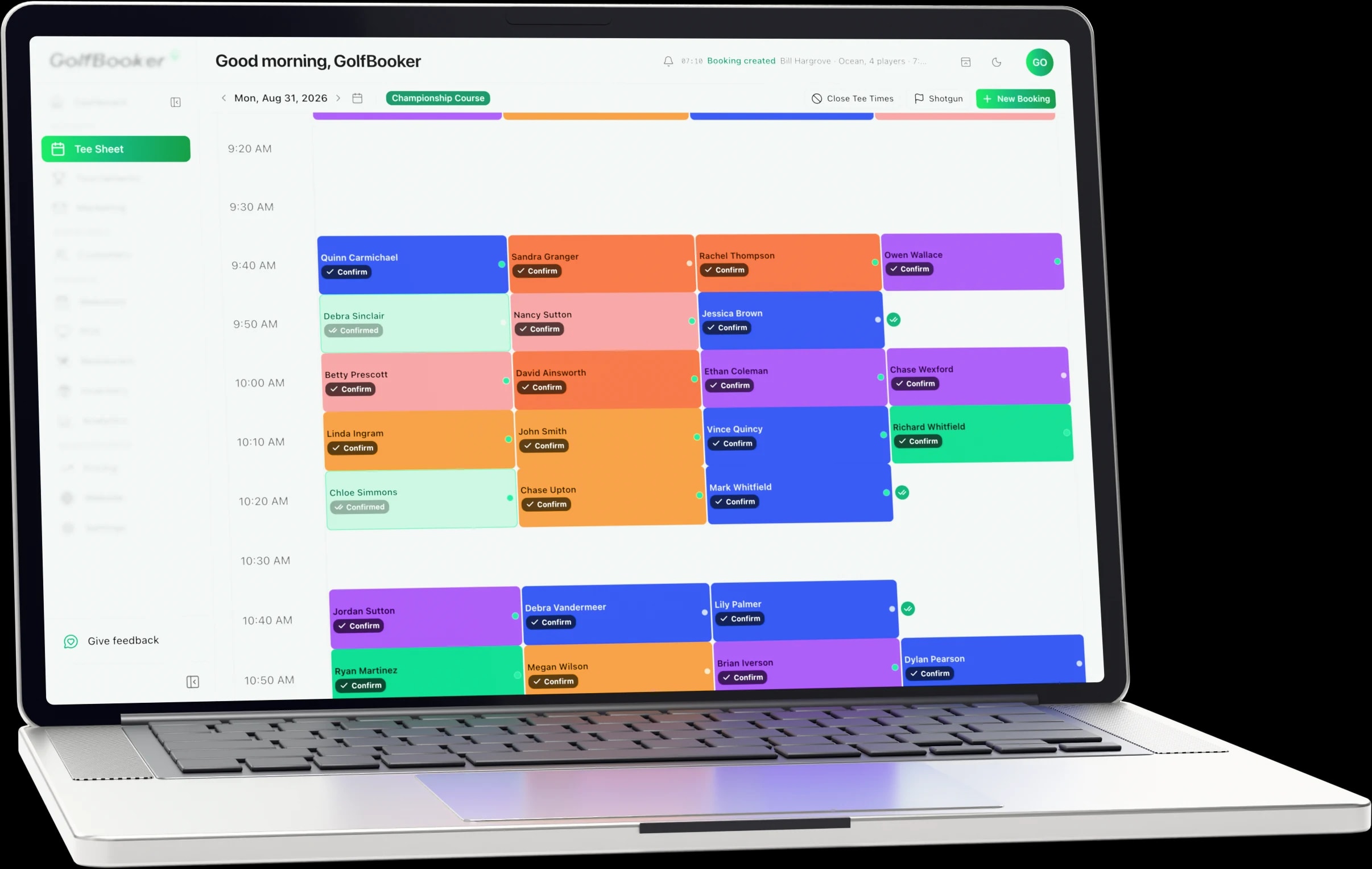
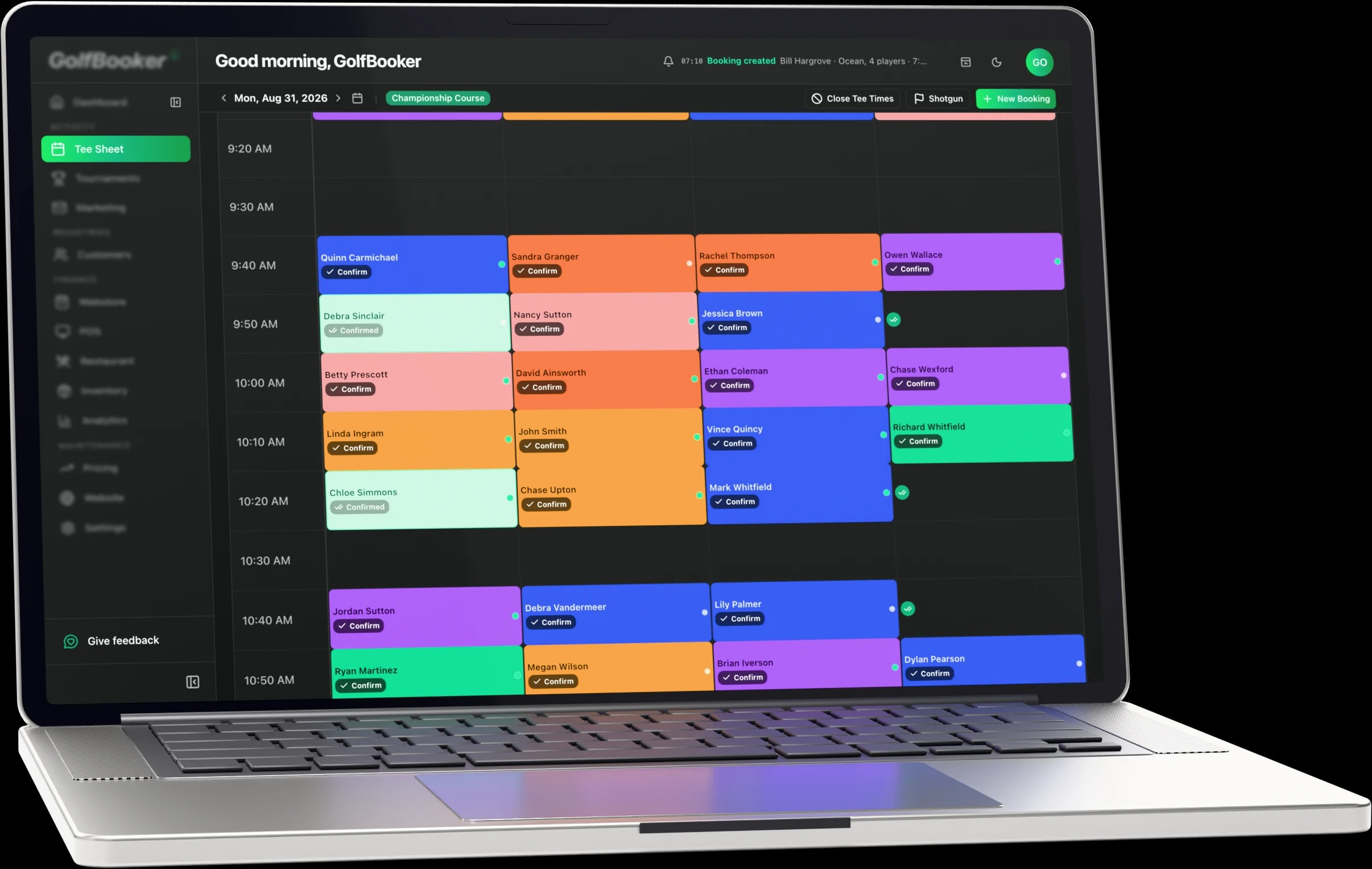
The GolfBooker tee sheet showing a morning of bookings with player names and confirmation status

Rounds today

243

Checked in

128

The short version

Why clubs pick GolfBooker over Chronogolf

Pick GolfBooker if

  • You want the golfer's email address, not the platform's. Every booking creates a customer record in your database, with the full history against their name.

  • You want the quiet Tuesday priced, not discounted by somebody else. Off-peak and early-bird rules and low-utilization automations fill gaps at rates you set.

  • You still want the marketplace, from a stronger position. Own the sheet first, then choose which surplus inventory to list and where.

The catch with Chronogolf

  • It is a distribution channel, not a booking system: there is no tee sheet, no till, no member roster and no billing.

  • Golfers create an account with the marketplace, so the email address and the reason to come back belong to the platform.

  • Listings sit in a Deals section, and golfers who only ever pay a deal rate learn that price is your price.

The long version

GolfBooker vs Chronogolf: what the difference actually is

GolfBooker is your own booking system. Your booking engine sits on your own website and in a branded golfer app, both writing to the same tee sheet as the front desk in real time. Every booking creates a customer record in your database, holding the golfer's full history against their name, so marketing segments off your own data and bringing them back is something you do rather than something you pay for. You set the rate by season, day of week, time of day and player category, and every channel follows it.

Chronogolf is not that. It was a business-to-business tee sheet, Lightspeed acquired it, and the name now sits on a golfer-facing marketplace: deals, destinations, course listings, and an invitation to list your golf course. People still search it expecting software to run a course on. It is a place to sell rounds.

Section by section

Who owns the golfer, the price and the tee time

On GolfBooker the booking happens on your website or in your branded app, the golfer becomes a customer record in your database with their full history against their name, and marketing segments off those same records. On a marketplace the golfer creates an account with the platform, sees your course alongside your neighbors, and books at the rate listed there, so the platform holds the email address, the booking history and the reason to come back. Discounting compounds it: a golfer who has only ever paid a deal rate has learned what your course costs, and it is not what your rate card says.

Verdict

GolfBooker on ownership, plainly. That is the entire argument on this page.

Pricing and filling the quiet slots yourself

GolfBooker prices green fees by season, day of week, time of day and player category, with off-peak and early-bird rates, so the quiet Tuesday afternoon gets priced deliberately rather than discounted by somebody else. Automations then fill what is left: a last-minute prompt when same-day capacity opens up, and an off-peak promotion when utilization drops below your threshold. Because they run inside the system that owns the sheet and the customer records, they target real booking history and can adjust the rate at the same time.

Verdict

Price the quiet slots yourself before you give them away at somebody else's rate.

A booking system is not a distribution channel

GolfBooker is a booking system: the record of truth for what is happening on your golf course, covering who is playing, at what rate, under which policy, with what history. A distribution channel is a different animal. It takes inventory you give it and puts it in front of an audience it owns, in exchange for margin or discount. A course can use several distribution channels. It can only have one record of truth, and if that record lives inside a channel, the channel is running your course. This is how to think about every marketplace, not just this one.

Verdict

Use channels for surplus. Do not let a channel be the system.

What Chronogolf actually is today

GolfBooker is the system your front desk works in every morning. chronogolf.com is not that, and is not trying to be: it is a consumer tee time marketplace operated by Lightspeed, where golfers search courses, browse a Deals section and golf destinations, create an account and book, and courses appear by being listed. There is no tee sheet you operate, no point of sale, no member roster, no tournament management and no billing, because none of that is what the site is for. It is a shop window with a booking button, and a perfectly good one.

Verdict

Different category. Chronogolf sells rounds; GolfBooker runs the course.

If you were looking for Lightspeed's course management software

GolfBooker competes with course management software, and if that is what you came looking for you are in the right family but on the wrong page. Chronogolf was the business-to-business product Lightspeed acquired, and their course management platform is now sold as Lightspeed Golf: a cloud tee sheet, retail and food and beverage point of sale, online booking, dynamic pricing, marketing and reporting. Our Lightspeed Golf comparison covers that properly, including where member management sits and what the payment and hardware arrangements look like.

Verdict

Search the right thing. Two Lightspeed products, two very different purchases.

Moving your bookings onto your own system

Moving onto GolfBooker does not require you to leave a marketplace, and most courses keep listing surplus inventory somewhere. Almost none of this comes out of Chronogolf, because a marketplace never held your roster or your catalog: customers, members, membership types and your product catalog come from whatever tee sheet and point of sale you run today. We map and validate them before anything loads, and your booking windows, cancellation policy, seasons and green fee rates go in before you open. What changes is where the sheet lives: the marketplace becomes one channel writing into your GolfBooker sheet, rather than the place your tee times live.

Verdict

This is an addition, not an amputation. Own the sheet, then choose your channels.

Recap

GolfBooker and Chronogolf, capability by capability

These are different kinds of product, so this is not feature against feature. The rows below are about who owns the golfer, the price and the tee time.

A tee sheet you operate

GolfBooker

Available: Your own cloud tee sheet, with every channel writing to it in real time.

Chronogolf

Not available: A marketplace listing, not a tee sheet you run.

Bookings on your own site and app

GolfBooker

Available: Your own booking engine and a branded golfer app, both writing to your sheet.

Chronogolf

Not available: Bookings happen on the marketplace, alongside other courses.

You hold the golfer record

GolfBooker

Available: One customer record per golfer, with booking history, spend and membership against their name.

Chronogolf

Not available: Golfers create an account with the marketplace.

You set the price

GolfBooker

Available: Rates by season, day, time and player category, with off-peak and early-bird rules.

Chronogolf

Not available: Listings appear in a Deals section at marketplace rates.

Point of sale

GolfBooker

Available: Included. Green fees, pro shop retail and food on one ticket against one customer record.

Chronogolf

Not available: Not part of the marketplace.

Member management and billing

GolfBooker

Available: Included, with membership types, automatic renewals and dues invoicing.

Chronogolf

Not available: Not part of the marketplace.

Tournament management

GolfBooker

Available: Included. Online registration, entry fees and automatic results.

Chronogolf

Not available: Not part of the marketplace.

Email, SMS and push marketing

GolfBooker

Available: Included, segmented off the same customer records.

Chronogolf

Not available: The marketplace markets to its own audience, not yours.

Every row is yes or no, on both sides. Chronogolf details come from the company's own site and published reviews, listed with their read dates at the foot of this page, and a no means the capability is not offered in those published materials. Where a capability could not be established either way, the row is left out rather than guessed.

Common questions about Chronogolf
Is Chronogolf a tee sheet or golf course management software?
Neither, today. It is a golfer-facing marketplace where golfers browse deals and book, and courses apply to be listed. If you want software to run your course on, that is GolfBooker, or Lightspeed Golf on their side.
What is the difference between Chronogolf and Lightspeed Golf?
Two products from one company. Chronogolf is the consumer marketplace; Lightspeed Golf is the course management platform. If you were searching for the system your front desk works in, our Lightspeed Golf comparison is the relevant one.
Can I use GolfBooker and still list tee times on a marketplace?
Yes, and plenty of courses do. GolfBooker becomes the record of truth for your sheet, your pricing and your customers, and the marketplace becomes one channel among several rather than the place your tee times live.
How do I fill quiet tee times without discounting them on a marketplace?
Price them and prompt them. GolfBooker sets rates by season, day, time and player category with off-peak and early-bird rules, then triggers a last-minute prompt when same-day capacity opens and an off-peak promotion when utilization drops below your threshold.

Switching from Chronogolf

What the move actually looks like

Four steps, one to two weeks for most clubs, and the team with you on the day. Import help and onboarding are included at no extra cost.

  1. Export from the system you run today

    A marketplace listing holds no member roster and no product catalog, so the exports come from whatever tee sheet and point of sale your course runs, not from Chronogolf. Customers, members, membership types and your catalog come out of those as CSV. We tell you exactly which exports we need before you start, so you are not guessing at which report to run.

  2. We map and validate

    We map the fields and run the file for duplicates and formatting problems before anything is loaded, then send you the list of what we found. Bad member records are cheaper to fix now than in your first week live.

  3. Your rules go in first

    Booking windows, cancellation policy, group limits, seasons and green fee rates by day, time and player category are configured before launch. You are not opening on defaults and correcting them under pressure.

  4. Go live with the team on the phone

    Switch-over morning is the one that matters, so we are on it with you: the people who build the product, from the first tee time to the last.

See it on your own course

A working demo on your operation, and a quote with the subscription and the booking commission both written down. If you are moving off Chronogolf, we will walk through what the import looks like.

Nick LeGarde

Nick LeGarde

Sales Lead

Prefer email? sales@golfbooker.app

Sources for the Chronogolf claims (1) and trademark notice

Chronogolf is a trademark of its owner and is named here only to identify the product being compared. Details are accurate to the dates above and product packaging changes.